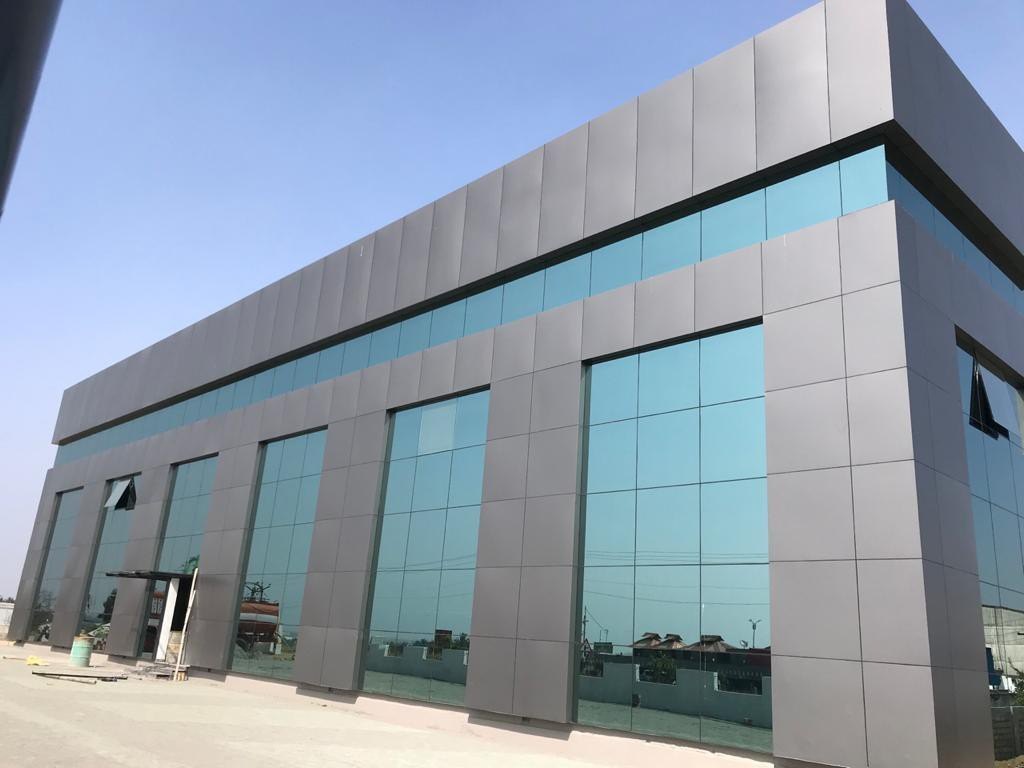
ACP Cladding
ACP (Aluminum Composite Panel) cladding is a popular and durable material used in construction and architectural design, offering both aesthetic appeal and practicality. Comprising two layers of aluminum with a non-aluminum core, ACP cladding is lightweight yet strong, making it an ideal choice for external facades, building exteriors, and interior applications. It is widely used in commercial, residential, and industrial buildings due to its versatility, longevity, and modern appearance.
ACP cladding provides several advantages over traditional materials such as brick, stone, or concrete. It is highly durable and resistant to weather conditions, including rain, UV radiation, and pollution, making it perfect for buildings exposed to harsh environmental factors. ACP cladding is also fire-resistant, adding a layer of safety to any structure. Its smooth, sleek surface allows for easy cleaning and maintenance, making it a practical option for both new construction and renovations.
One of the standout features of ACP cladding is its aesthetic flexibility. The panels can be customized in a wide range of colors, finishes, and textures to create a unique and visually striking appearance. From matte and glossy finishes to wood or stone-like textures, ACP can mimic a variety of materials, making it suitable for diverse design styles. Additionally, the lightweight nature of ACP panels makes installation quicker and more cost-effective compared to heavier materials.
In summary, ACP cladding offers a modern, durable, and customizable solution for enhancing the aesthetics and performance of buildings, making it a popular choice for architects and builders.